The Intelligent Web: Navigating the Latest Developments in Web Development (2025–2026)
The landscape of web development has always been characterized by rapid evolution, but the period between 2025 and 2026 has marked a fundamental shift in the very DNA of the internet. We have moved beyond the “mobile-first” era into an “AI-native” epoch. Today, web development is no longer just about building interfaces that display information; it is about architecting intelligent platforms that can reason, adapt, and execute complex workflows in real-time.
As we navigate through 2026, several key developments are redefining how developers work and how users experience the digital world.
1 The Rise of Agentic Web Experiences
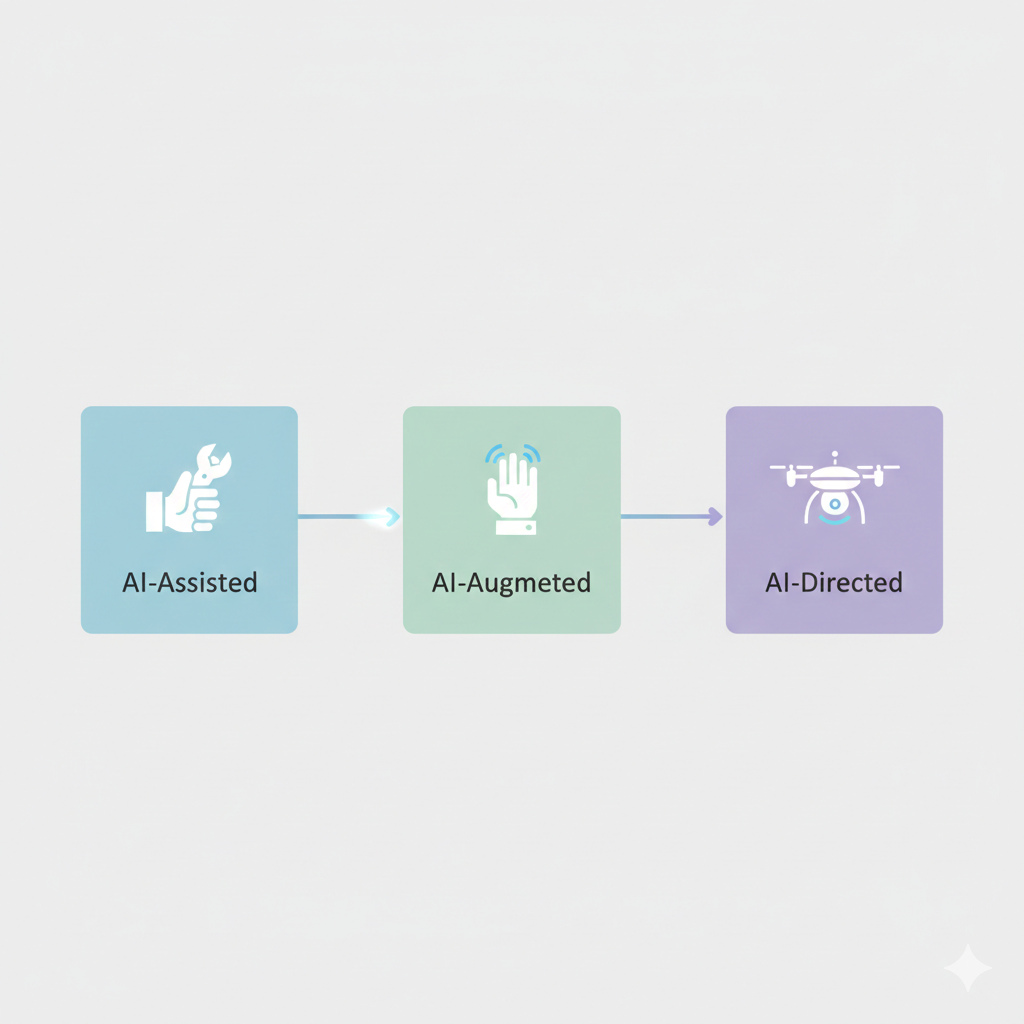
Perhaps the most significant shift is the evolution of Artificial Intelligence from a “chat assistant” to an “autonomous agent.” In early 2025, AI was primarily used for content generation or basic chatbots. In 2026, we are seeing the rise of Agentic AI—systems built into the fabric of a website that can perform tasks on behalf of the user.
Instead of navigating complex menus to book a flight or manage a subscription, users can simply provide an intent. The website’s underlying agents interact with APIs, verify data, and complete the transaction autonomously. This has led to “Intent-Based UI”, where the interface dynamically morphs to show only what is necessary for the agent and user to complete a specific goal.
Key Technologies: OpenAI API LangChain AutoGPT
2 High-Performance Runtimes: The Rise of Bun and WebAssembly (Wasm)
For nearly a decade, Node.js was the undisputed king of JavaScript runtimes. However, by 2026, Bun has moved from a niche alternative to a dominant force in the ecosystem. Its near-instant start times and built-in support for TypeScript and JSX have significantly reduced development friction.
Complementing this is the maturation of WebAssembly (Wasm). Wasm is no longer just for high-end gaming or video editing in the browser. It is now frequently used to bring complex logic written in Rust, C++, or Go into standard web applications. This enables near-native performance for data-intensive tasks, such as real-time encryption, local machine learning model execution, and advanced image processing, all without the latency associated with a round-trip to the server.
Key Technologies: Bun WebAssembly Rust WASI
3 The “TanStack-ification” and Meta-Framework Dominance
The way we structure the frontend has become more modular. Meta-frameworks like Next.js 15+ and Remix 3 have become the industry standard, effectively ending the era when developers spent days manually configuring bundlers and routers.
A notable trend is the widespread adoption of the TanStack ecosystem. Tools like TanStack Query, Table, and Start have become the “Swiss Army Knife” for developers, offering a framework-agnostic way to handle state, data fetching, and complex UI logic. This shift toward high-quality, specialized libraries has allowed developers to focus more on unique business logic rather than reinventing the wheel for data synchronization.
Key Technologies: Next.js 15 Remix TanStack Query Vite
4 Design Aesthetics: “Nature Distilled” and Tactile Maximalism
Design trends in 2026 have split into two fascinating directions. On one hand, there is a movement toward “Nature Distilled”—an aesthetic characterized by muted, earthy tones (such as Pantone’s 2026 “Cloud Dancer”), organic shapes, and typography that feels handmade. This trend is a reaction to the cold, clinical minimalism of the previous decade, seeking to bring warmth and “digital comfort” back to the screen.
Conversely, Tactile Maximalism is gaining traction for brands that want to stand out. This involves using 3D elements, kinetic typography (text that moves and reacts to the cursor), and “dopamine palettes” of high-saturation colors. Thanks to technologies like WebGPU, these visually intense experiences no longer come at the cost of performance, allowing for smooth, 60fps animations even on mobile devices.
Key Technologies: WebGPU Three.js Framer Motion CSS Houdini
5 Edge-Native and Serverless Evolution
The concept of the “centralized server” is fading. Modern applications are increasingly edge-native, meaning the code runs on servers physically located as close to the user as possible (using providers like Cloudflare Workers or Vercel Edge).
This architecture is essential for the AI-driven web. When a website needs to personalize content in real-time or run a small LLM (Large Language Model) for a user, doing so at the edge reduces latency from seconds to milliseconds. This has given birth to “Isomorphic-First” development, where the boundary between what happens on the server and what happens in the browser is almost invisible to the developer.
Key Technologies: Cloudflare Workers Vercel Edge Netlify Functions Deno Deploy
6 Privacy-First and Zero-Trust Security
With the total phase-out of third-party cookies and rising global privacy regulations, web development has embraced Privacy-First Design. Developers are now leveraging first-party data strategies and Consent-Driven Analytics.
Security has also shifted from “bolted-on” to “built-in.” The Zero-Trust Architecture is now the standard for enterprise web apps. In this model, no request is trusted by default, regardless of where it originates. Authentication is continuous, and granular permissions are handled through secure, short-lived tokens, making modern web apps more resilient to the sophisticated cyber-attacks of the mid-2020s.
Key Technologies: Passkeys OAuth 2.1 Clerk Auth0
7 Sustainability: Green Coding
As the environmental impact of data centers becomes a global concern, Green Coding has entered the mainstream. 2026 sees developers prioritizing “carbon-conscious” code—optimizing bundle sizes not just for speed, but to reduce the energy required to transmit and process data. Tools now exist to measure the “carbon per visit” of a webpage, and “Green Hosting” (running on 100% renewable energy) has become a competitive advantage for hosting providers.
Key Technologies: WebPageTest Carbon Ecograder Green Web Foundation
Conclusion
Web development in 2026 is defined by a paradox: it is more complex under the hood, yet more intuitive for the end-user. The combination of AI agents, high-performance runtimes like Bun, and a return to organic, human-centered design has created a web that feels less like a collection of pages and more like a living, breathing assistant. For developers, the challenge is no longer just “how to build,” but “how to architect” systems that are ethical, sustainable, and truly intelligent.
The future is here: It’s intelligent, edge-native, privacy-first, and sustainable. Are you building for it?
Article prepared for WordPress publication – Ready to engage your audience with the latest in web development trends.